Blog

  • Health Ministry implements HIV, AIDS Act

    Health Ministry implements HIV, AIDS Act

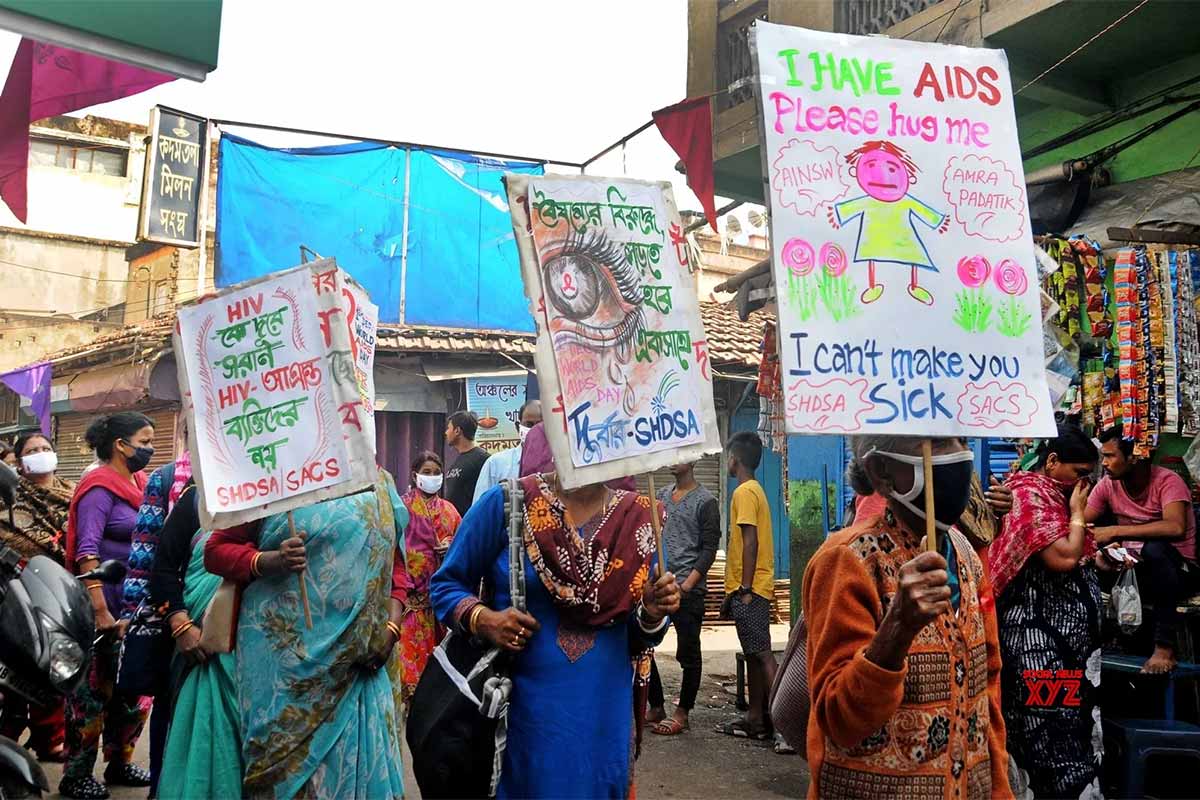
    A crucial legislation for ensuring equal rights to persons affected by HIV and AIDS in getting treatment, admission in educational institutions and jobs has come into force. The Ministry of Health has announced the implementation of the Human Immunodeficiency Virus (HIV)

    A crucial legislation for ensuring equal rights to persons affected by HIV and AIDS in getting treatment, admission in educational institutions and jobs has come into force.

    The Ministry of Health has announced the implementation of the Human Immunodeficiency Virus (HIV) and Acquired Immune Deficiency Syndrome (AIDS) Act through a gazette notification has been issued.

    The Act, which received Presidential assent on April 20 last year, prohibits discrimination against such persons in accessing healthcare, getting jobs, renting accommodation, and in admission to public and private educational institutions.

    The moves come after the Delhi High Court asked the Centre why it has not yet notified the law to prevent discrimination against HIV and AIDS patients despite the statute receiving Presidential assent in April last year.

    Hearing a PIL that sought immediate notification of the legislation, a bench of Chief Justice Rajendra Menon and Justice C Hari Shankar had asked the health ministry, “You make a law and are not notifying it. Why?”. The matter was listed for hearing on November 26.

    “In exercise of the powers conferred by sub-section 3 of section 1 of the Human Immunodeficiency Virus (HIV) and Acquired Immune Deficiency Syndrome (Prevention and Control) Act, 2017, the Central Government hereby appoints the 10th day of September, 2018, as the date on which the provisions of the said Act shall come into force,” the notification read.

    According to the provisions of the Act, no HIV test, medical treatment or research will be conducted on a person without his informed consent and no person shall be compelled to disclose his HIV status for obtaining employment or services, except with his informed consent, and if required by a court order.

    The legislation has provisions to safeguard the property rights of HIV positive people, he said, adding that every HIV infected or affected person below the age of 18 years has the right to reside in a shared household and enjoy the facilities of the household.

    The act also prohibits any individual from publishing information or advocating feelings of hatred against HIV positive persons and those living with them.

  • Govt list of FAQs clarifies doubts on CSR

    Govt list of FAQs clarifies doubts on CSR

    As you may be aware, CSR has been made mandatory, following an amendment to the Companies Act, 2013 in April 2014. Businesses can invest their profits in areas such as education, poverty, gender equality, and hunger as part of any CSR compliance

    As you may be aware, CSR has been made mandatory, following an amendment to the Companies Act, 2013 in April 2014.

    Businesses can invest their profits in areas such as education, poverty, gender equality, and hunger as part of any CSR compliance.

    Large companies are required to spend 2 per cent of their net profit on CSR activities.

    A set of FAQs along with clarifications are provided below for better understanding of the stakeholders.

    1. What is meaning of ‘any financial year’ mentioned in Section 135 (1) of the Companies Act, 2013?
      “Any Financial year” referred under Sub- Section (1) of Section 135 of the Act read with Rule 3(2) of Companies CSR Rule, 2014 implies any of the three preceding financial years ( may refer General Circular No. 21/2014, dated: 18.06.2014)
    2. Compliance under section 135 of the Act i.e. Corporate Social Responsibility, is applicable from which Financial Year?

      The compliance of the provisions of CSR under the Companies Act, 2013 i.e. constitution of CSR Committee, formulation of CSR Policy, the spending of requisite amount on CSR activities came into force from April, 2014.

    3. Whether expenditure by Companies on activities covered under Schedule VII for the fulfillment of any Act/Statute of Regulations will count as CSR expenditure?

      This would not count as CSR expenditure. (may refer point no. (iii) of General Circular No. 21/2014, dated: 18.06.2014)

    4. Can the expenditure incurred towards personnel exclusively appointed by the companies for implementing the CSR activities of the company, be included in the expenditure earmarked for CSR activities?

      Salary paid by the companies to regular CSR staff as well as employees, who render their services for CSR will be part of Administrative overheads and should not exceed 5% of the total CSR expenditure as per rule 4(6) of CSR Policy, Rules 2014.

    5. Whether CSR expenditure of a company can be claimed as a business expenditure?

      The amount spent by a company towards CSR cannot be claimed as business expenditure. The Finance Act, 2014 provides that any expenditure incurred by an assessee on the activities relating to corporate social responsibility referred to in section 135 of the Companies Act, 2013 shall not be deemed to be an expenditure incurred by the assessee for the purposes of the business or profession.

    6. Whether the ‘average net profit’ criteria for section 135(5) is Net profit before tax or Net profit after tax?

      Computation of net profit for section 135 is as per section 198 of the Companies Act, 2013 which primarily is NET PROFIT BEFORE TAX.

    7. Can the CSR expenditure be spent on the activities beyond Schedule VII?

      General Circular No. 21/2014 dated June18, 2014 of MCA has clarified that the statutory provision and provisions of CSR Rules, 2014, is to ensure that while activities undertaken in pursuance of the CSR policy must be relatable to Schedule VII of the Companies Act 2013. However, the entries in the said Schedule VII must be interpreted liberally so as to capture the essence of the subjects enumerated in the said Schedule. The items enlisted in the Schedule VII of the Act, are broad-based and are intended to cover a wide range of activities.

    8. What tax benefits can be availed under CSR?

      No specific tax exemptions have been extended to CSR expenditure per se. Finance Act, 2014 also clarifies that expenditure on CSR does not form part of business expenditure. While no specific tax exemption has been extended to expenditure incurred on CSR, spending on several activities like contributions to Prime Minister’s Relief Fund, scientific research, rural development projects, skill development projects, agricultural extension projects, etc., which find place in Schedule VII, already enjoy exemptions under different sections of the Income Tax Act, 1961.

    9. Which activities would not qualify as CSR Expenditure?
      • The CSR projects or programs or activities that benefit only the employees of the company and their families shall not be considered as CSR activities in accordance with section 135 of the Act.
      • One-off events such as marathons/ awards/ charitable contribution/ advertisement/sponsorships of TV programmes etc. would not be qualified as part of CSR expenditure.
      • Expenses incurred by companies for the fulfillment of any Act/ Statute of regulations (such as Labour Laws, Land Acquisition Act etc.) would not count as CSR expenditure under the Companies Act.
      • Contribution of any amount directly or indirectly to any political party shall not be considered as a CSR activity.
      • Activities undertaken by the company in pursuance of its normal course of business.
    10. Will being a holding or subsidiary company of a company which fulfils the criteria under section 135(1) make the company liable to comply with section 135, even if the company itself fulfills the criteria

      Being a holding or subsidiary company of a company which fulfils the criteria under section 135(1) doesn’t make the company liable to comply with section 135, unless the company itself fulfills the criteria.

    11. Whether provisions of CSR are applicable on Section 8 Company, if it fulfills the criteria of section 135(1) of the Act.

      Section 135 of the Act reads “ Every company…….”, i.e no specific exemption given to section 8 companies with regard to applicability of section 135, hence section 8 companies are required to follow CSR provisions.

    12. Can donation of money to a trust by a company be treated as CSR expenditure of the company?

      General Circular No. 21/2014 of MCA dated June 18, 2014 clarifies that Contribution to Corpus of a Trust/ Society/ Section 8 companies etc. will qualify as CSR expenditure as long as:

      1. the Trust/ Society/ Section 8 company etc. is created exclusively for undertaking CSR activities or
      2. where the corpus is created exclusively for a purpose directly relatable to a subject covered in Schedule VII of the Act
    13. There is no need to prepare director’s report for Foreign company so whether it is mandatory for foreign Company also to give reporting of CSR activity

      In case of a foreign company, the balance sheet filed under sub-clause (b) of sub-section (1) of section 381 shall contain an Annexure regarding report on CSR.

    14. Whether contribution to political party is considered as CSR activity?

      Contribution of any amount directly or indirectly to any political party under section 182 of the Act, shall not be considered as CSR activity. (May refer Rule 4(7) of CSR Policy, Rules 2014).

    15. Whether CSR projects or programmes for employee of the Company and their family will form part of CSR activity?

      NO, The CSR projects or programs or activities that benefit only the employees of the company and their Families shall not be considered as CSR activities in accordance with section 135 of the Act’. (May refer Rule 4(5) of CSR Policy, Rules 2014).

    16. Whether expenditure incurred on disaster relief qualifies for CSR or not?

      Disaster relief can cover wide range of activities that can be appropriately shown under various items listed in Schedule VII. For example,

      1. medical aid can be covered under ‘promoting health care including preventive health care.’
      2. food supply can be covered under eradicating hunger, poverty and malnutrition.
      3. supply of clean water can be covered under ‘sanitation and making available safe drinking water’. (May refer to annexure to General Circular dated 18.06.2014)
    17. Whether contribution in kind is permissible as CSR or not?

      Section 135 prescribes “….shall ensure that company spends….”.The company has to spend the amount.