Author: csr-voice

  • Andhra Pradesh hopes to fund social schemes through donations

    Andhra Pradesh hopes to fund social schemes through donations

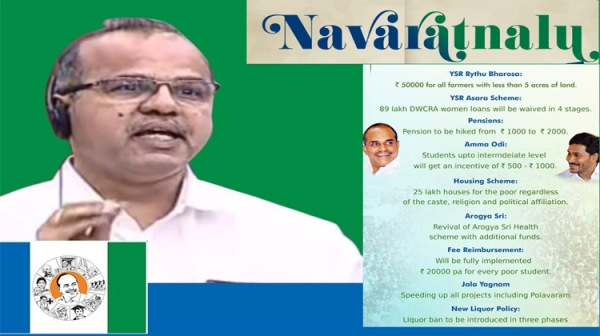
    The Andhra Pradesh Government is targeting to raise at least Rs 1,000 crore through contributions from different sources in the ongoing financial year under a new initiative called ‘Connect-to-Andhra.’ The funds thus obtained will be utilised on the government’s flagship “Navaratnalu” programme

    The Andhra Pradesh Government is targeting to raise at least Rs 1,000 crore through contributions from different sources in the ongoing financial year under a new initiative called ‘Connect-to-Andhra.’

    The funds thus obtained will be utilised on the government’s flagship “Navaratnalu” programme (nine schemes), under which aid will be given to people through various schemes.

    The Chief Minister is chairman of the apex advisory board of CTA, which will be implemented on a mission mode. In the 2018-19 financial year, various companies and organisations spent Rs 62.59 crore on various projects under Corporate Social Responsibility. The government received another Rs 13.3 crore for implementation of CSR schemes.

    Besides CSR grants from business houses, the government is now targeting to secure “philanthropic funds” from “high net-worth individuals” like industrialists, public representatives and film stars and also “social impact investments” from organisations like Bill and Melinda Gates Foundation, Michael and Susan Dell Foundation and also non-governmental organisations.

    “My government is committed in its efforts to bring upward mobility in the lives of the marginalised population. Our flagship schemes Navaratnalu cater to universal healthcare, access to education, housing, social security for the deserved,” Chief Minister YS JAGAN Mohan Reddy has said in a message on the launch of Connect-to-Andhra (CTA).

    Donations will also be sought from non-resident Telugus (those living abroad) and other individuals for Connect-to-Andhra. This year, the government has already identified ‘contributors’ for the new Mission and is targeting to raise Rs 1,000 crore through them.

    The CTA Mission has identified several projects related to improving infrastructure in schools, polytechnics, Industrial Training Institutes, setting up of primary processing and milk collection centres, improving urban green spaces and plantation along important roads and rail tracks, restoring open forests, agro-forestry, upgrading primary and community health centres and affordable housing for the poor.

    The government is exploring the option of setting up a ‘Section 8 Company’, under the Companies Act, 2013, with the name ‘Connect-to-Andhra’ for resource mobilisation, according to the Concept Note.

    A Section 8 Company is intended for the promotion of commerce, art, science, sports, education, research, social welfare, religion, charity, protection of the environment, or any such other objective.

    All projects hitherto taken up under Smart Andhra Pradesh Foundation, launched by the previous Telugu Desam Party government, along with the resources will be merged with the proposed company.

    A Social Responsibility Wing, headed by an Indian Revenue Service officer, has been created in the state Planning Department as the nodal agency to mobilise funds for the government’s flagship welfare programmes.

    A sum of over Rs 30,000 crore is required annually to implement the numerous welfare schemes like Rythu Bharosa (support to farmers), Amma Vodi (dole to mothers for sending their kids to school), Vahana Mitra (annual maintenance grant to auto and cab drivers), social security pensions, annual monetary grant for junior lawyers, fee reimbursement for students, housing for the poor, etc.

    While some of these schemes are dovetailed with Central government programmes to lessen the financial burden, some are unique that requires full funding from the state coffers, official sources said. Alternatively, the government is also looking at the option of re-naming the Smart AP Foundation as ‘Connect-to-Andhra.’
  • CSR not limited to just giving money; Secretary Corp Affairs

    CSR not limited to just giving money; Secretary Corp Affairs

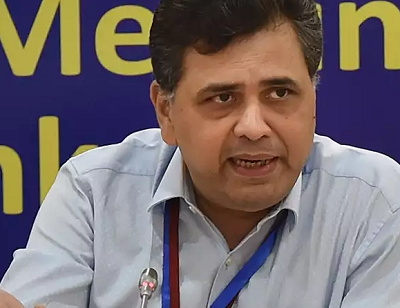
    Just contributing money is not what the government expects through the CSR framework and companies should ensure proactive rather than passive participation in social welfare spending activities, according to Corporate Affairs Secretary Injeti Srinivas. Speaking at the country’s first National CSR Awards

    Just contributing money is not what the government expects through the CSR framework and companies should ensure proactive rather than passive participation in social welfare spending activities, according to Corporate Affairs Secretary Injeti Srinivas.

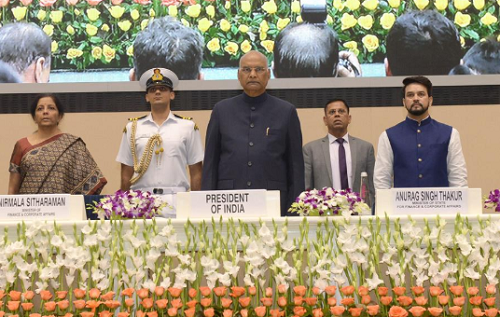
    Speaking at the country’s first National CSR Awards function on Tuesday (October 29), the Corporate Affairs Secretary also made it clear that the government does not treat CSR as a resource to fill up any budgetary gap.

    “It (government) treats CSR (corporate social responsibility) as a tool or instrument to find technology-driven innovative solutions to social problems. That is something very important,” he said.

    Under the Companies Act, 2013, certain classes of profitable entities are required to spend at least two per cent of their three-year annual average net profit towards CSR activities in a financial year.

    Since the provision came into force from April 1, 2014, the cumulative contribution has been more than Rs 50,000 crore.

    “What we urge upon you (companies) is proactive participation and not passive participation. Just contributing money or giving some money (as CSR) is not what we expect.

    “We expect you to look at problems, solve problems which can then be scaled up to the national level. That is something of the broader vision of CSR and you think that in the years to come, things like social impact companies, social impact bonds all these will also gain currency heavily,” Srinivas said.

    The awards have been instituted by the Ministry of Corporate Affairs, which is implementing the Companies Act.

  • Expand CSR reach to poor, North East states: FM exhorts India Inc

    Expand CSR reach to poor, North East states: FM exhorts India Inc

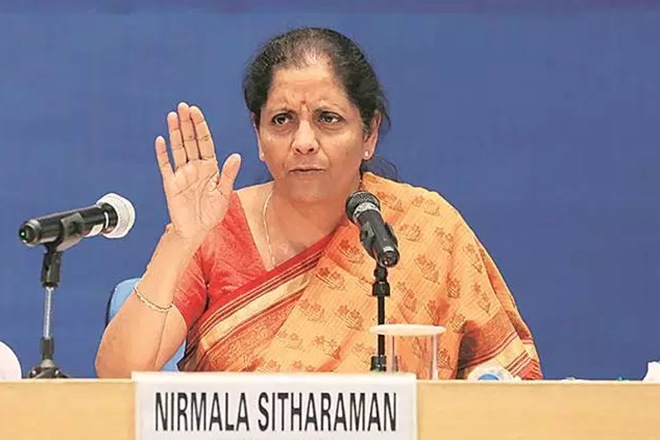
    Corporate Affairs Minister Nirmala Sitharaman has exhorted India Inc to expand CSR reach to poor states like Jharkhand, Chattisgarh, Bihar and North East region. Appreciating that companies have spent about Rs 13,000 crore in 2018 under Corporate Social Responsibility (CSR), she said, this is very

    Corporate Affairs Minister Nirmala Sitharaman has exhorted India Inc to expand CSR reach to poor states like Jharkhand, Chattisgarh, Bihar and North East region.

    Appreciating that companies have spent about Rs 13,000 crore in 2018 under Corporate Social Responsibility (CSR), she said, this is very relevant for the development of the hinterland.

    “We find a significant presence of CSR in states like Maharashtra, Gujarat, Karnataka, Tamil Nadu, Andhra Pradesh and Delhi… states like Chattisgarh, Odisha, Jharkhand and Bihar also require such support from CSR. Not to forget all the eight states of North East region,” the finance minister said on the occasion of First National CSR Awards here.

    The recognition has been given to wealth creators not just for wealth creation but to give back to the community in the name of CSR, she said, adding that giving back to community from the justified profit is the spirit of the CSR, which has gained a lot of traction.

  • President Kovind lobbies for orphans and disabled

    President Kovind lobbies for orphans and disabled

    Emphasising that social welfare activities will generate enough goodwill for wealth creators among ordinary people, President Ram Nath Kovind on Tuesday suggested companies to look at ways to contribute more towards CSR spending for orphans and disabled people

    New Delhi, October 29: Emphasising that social welfare activities will generate enough goodwill for wealth creators among ordinary people, President Ram Nath Kovind on Tuesday suggested companies to look at ways to contribute more towards CSR spending for orphans and disabled people.

    “I sincerely hope that innovative solutions to persisting development challenges will emerge from the CSR activities,” he said at the first National Corporate Social Responsibility (CSR) awards function here.

    The CSR provisions under the Companies Act, 2013 came into force from April 1, 2014.

    Under the Act, a certain class of profitable companies are required to shell out at least two per cent of their three-year average annual net profit towards CSR activities in a particular financial year.

    Noting that the response of companies to the CSR framework has been highly commendable, the president said every fiscal since 2014-15, the corporate sector has set aside a total of more than Rs 10,000 crore for social welfare.

    Sharing his vision, Kovind said when it comes to helping those in need in the society, there are resources, the will and a framework too.

    “Whom shall we help most? I have in mind orphan children and Divyang (disabled people). While the government has done what it can to give them a helping hand, society and especially the corporate sector can still do more for them.

    “Can we plan in such a way that within a foreseeable future, every orphan child can get personal care? We can set 2030 as a deadline to ensure providing care to every child and reap the benefits of demographic advantage that we have,” he said.

    Suggesting “food for thought and action”, Kovind said that respect is received by donating wealth and not by storing wealth.

    According to him, it is equally important to internalise social welfare in the corporate culture.

    He asked the companies to motivate their employees and sensitise them to this higher calling in service of the marginalised sections of society.

    This single step would generate enough goodwill for wealth creators among ordinary people, he added.

    “The Companies Act was amended in 2013-14, making it mandatory for companies with a specified level of profit to spend two per cent of it on social welfare. I am told it is one of the world’s largest experiments in promoting CSR,” Kovind said.

    While noting that what is now called CSR is “very much in our DNA”, the president said the legacy was carried forward by entrepreneurs of early industrialism.

    “Illustrious business families like Tata, Birla and Bajaj and many others associated with our freedom struggle were sensitive to their social responsibilities. Mahatma Gandhi developed the principle of trusteeship, not only from his deep understanding of our various religious traditions but also based on the generosity of industrialists associated with him,” he added.

    From now onwards, the National CSR awards — instituted by the Ministry of Corporate Affairs — would be conferred every year on October 2, the birth anniversary of Mahatma Gandhi.

  • CSR campaign by Philips to promote awareness on pneumonia

    CSR campaign by Philips to promote awareness on pneumonia

    Philips India a leader in health technology has launched an awareness camoaign under its CSR inititive to boost focus on childhood pneumonia. The aim of this campaign is to reach parents, family and caregivers and bring them up to date with it’s harmful effects.

    Philips India a leader in health technology has launched an awareness camoaign under its CSR inititive to boost focus on childhood pneumonia.

    The aim of this campaign is to reach parents, family and caregivers and bring them up to date with it’s harmful effects.

    India has the highest number of childhood pneumonia cases in the world, both in terms of morbidity and mortality. Around 1.5 lakh children lose their life due to pneumonia each year with 30 million new cases reported annually. In children under five years, pneumonia contributes to nearly a sixth (15%) of all deaths in India, with one child dying from pneumonia every four minutes.

    Through this campaign, we aim to focus on both urban and rural areas and reach out to the people through multiple mediums including TV, radio, print, digital, social media channels and on-ground initiatives.

    Daniel Mazon, Vice Chairman and Managing Director, Philips Indian Subcontinent, said, “The key to preventing pneumonia in children below the age of 5 years is identifying those at risk and educating parents and caregivers on its diagnosis and treatment. Philips is committed to contribute towards the reduction of cases of childhood pneumonia in India through this nationwide awareness campaign.”

  • LG to sponsor 800 cornea transplants in India

    LG to sponsor 800 cornea transplants in India

    Korean tech giant LG has decided to sponsor 800 cornea eye transplant surgeries across India under its initiative ‘Karein Roshni’ in association with two eye hospitals. The initiative assumes significance as India is home to a third of the world’s blind population. The country has about 12 million

    Korean tech giant LG has decided to sponsor 800 cornea eye transplant surgeries across India under its initiative ‘Karein Roshni’ in association with two eye hospitals.

    The initiative assumes significance as India is home to a third of the world’s blind population. The country has about 12 million individuals with visual impairment as against the global total of 39 million.

    Under the Karein Roshni, the company will invite people to come forward and pledge to donate their eyes for the noble cause, the company said in a statement.

    The awareness about the initiative will be created through radio and digital media. The company also plans to have on-ground activations at LG stores inviting Indian citizens to pledge for donating their eyes for this cause.

    The programme will be implemented along with Sankara Eye Hospital, a not-for-profit charitable eye hospital and Dr Shroff charity eye hospital.

    According to Dr Shroff Charity Eye Hospital CEO Arun Arora, India has approximately 120,000 needlessly blind people due to corneal disease with 20,000 annually adding to the list.

    Corneal transplantation surgery is the best available therapeutic option that can rehabilitate these patients suffering from corneal blindness, he said.

    “With our patient numbers and corneal transplant surgeries growing by the day, any kind of support from brands like LG Electronics always help. We are thankful to LG Electronics for its generous support and sponsorship. The corneal transplant surgeries coupled with Eye Donation Awareness Drive will set the momentum for a larger change for this cause in our country,” Arora added.

    Sankara Eye Foundation Founder and Managing Trustee Dr R V Ramani said, “Non-availability, non-affordability and inaccessibility to quality eye care, especially in rural India, has been the challenging scenario for the economically weaker sections. We are thankful to multinationals like LG Electronics for their continuous support in making it possible for such people to follow their dreams.”

    LG Electronics India Managing Director Ki Wan Kim said: “We received an overwhelming response for Karein Roshni campaign last time, and hope to receive the same this year.”

    He said that the company uses both its innovation and a widespread network to create positive change in society.

    “We are happy to announce Karein Roshni campaign that will help improve quality of life of people with no vision, allowing them to become more aware of the world around them and empower them with more choice, freedom and greater possibilities,” he added.

    The current year is a milestone for LG Electronics as the company celebrates its 22nd anniversary in India.

  • SBI introduces ‘Green Reward Points’ to promote sustainability

    SBI introduces ‘Green Reward Points’ to promote sustainability

    State Bank of India (SBI) has launched a unique ‘Green Reward Points’ programme to onboard its YONO customers in the sustainability journey. Under this programme, SBI inspires customers to pledge earned ‘Green Reward Points’ to a pool created as ‘YONO SBI Green Fund’ which is managed by SBI Foundation

    State Bank of India (SBI) has launched a unique ‘Green Reward Points’ programme to onboard its YONO customers in the sustainability journey.

    Under this programme, SBI inspires customers to pledge earned ‘Green Reward Points’ to a pool created as ‘YONO SBI Green Fund’ which is managed by SBI Foundation, the bank said in a statement.

    The bank through ‘YONO SBI Green Fund’ will initiate environment conservation activities through various programs.

    The Fund will be used for planting of trees, constructing of bio-toilets, initiating “Conserve Water Campaign” along with setting up RO Plants in cities facing drinking water crisis, creating awareness about avoidance of single-use plastic among customers and encourage usage of solar energy across the country, it added.

    SBI customer will now earn ‘Green Reward points’ through transactions on YONO and they would be given an option to pledge these points to ‘YONO SBI Green Fund’.

    Customers earning Rewardz points through non-YONO transaction channels like mobile NS internet banking will be given an option to convert it into ‘Green Reward points’ which on conversion can be pledged to the fund.

    All the customers pledging their points to the fund will be awarded a ‘Green e-Certificate’ as a token of appreciation towards their support for this initiative.

    SBI, on the other hand, has also committed to converting lapsed ‘Green Reward Points’ of customers by informing them for environment conservation through YONO SBI Green Fund. SBI customers can earn up to 200 Green Reward points on each eligible service provided by the bank.

    Speaking about the initiative, SBI Chairman Rajnish Kumar said: “With a pledge to conserve the environment, we invite all our customers to partner with us in promoting sustainability.”

    To make this a wide-scale programme, SBI will proactively communicate with its customers through various channels of communication to come forward and pledge Green Reward points for the initiative, the bank added.

  • Droom goes on a go green drive in Gurugram

    Droom goes on a go green drive in Gurugram

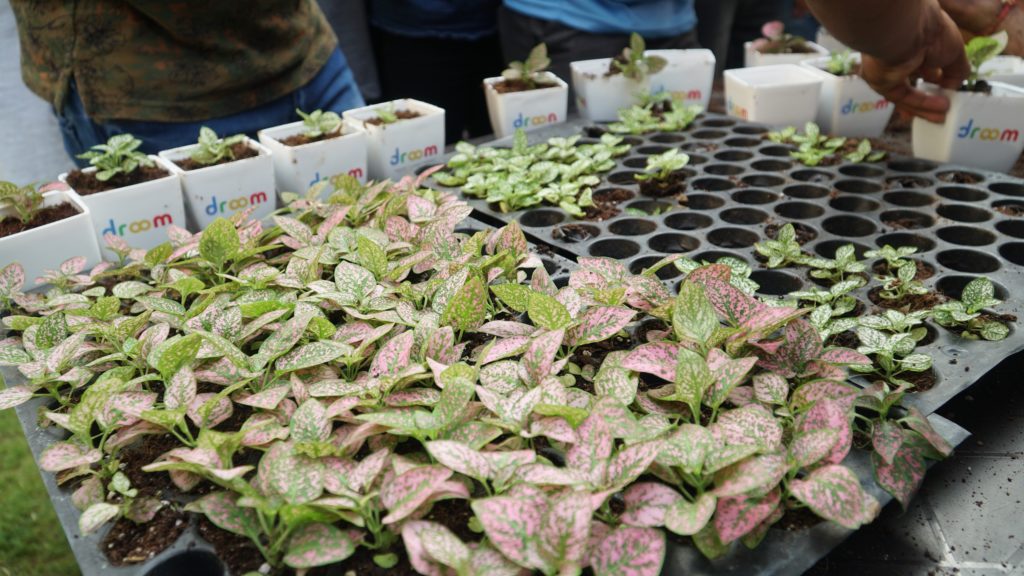
    Organised used car platform Droom has decided to plant over 1,000 samplings of ‘hypoestes’ variety around its campus in Gurugram, Haryana. Hypoestes is a polka-dotted plant species that is well known for its oxygen-enriching ability and was therefore selected for this intensive green plantation

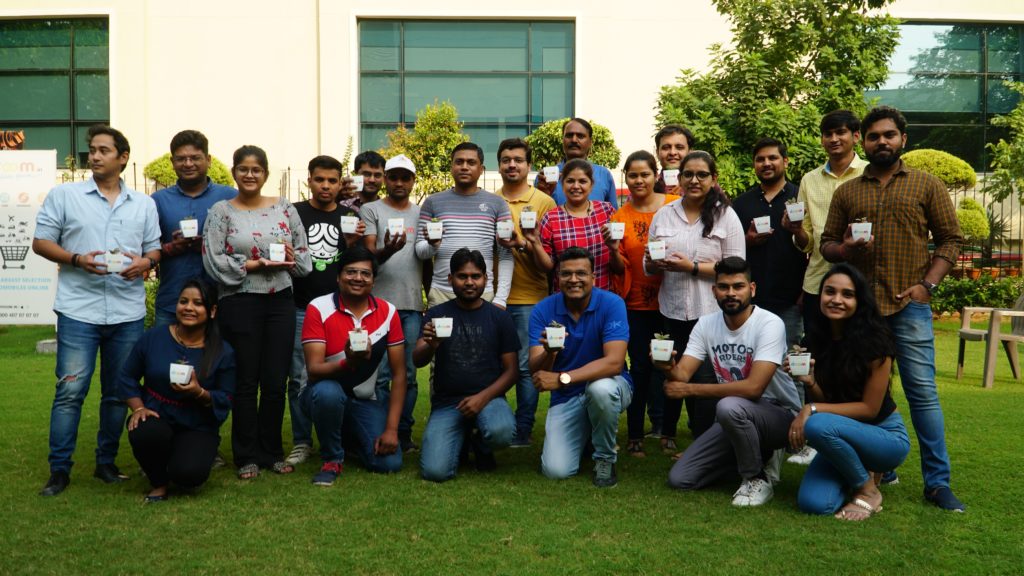
    Organised used car platform Droom has decided to plant over 1,000 samplings of ‘hypoestes’ variety around its campus in Gurugram, Haryana.

    Hypoestes is a polka-dotted plant species that is well known for its oxygen-enriching ability and was therefore selected for this intensive green plantation exercise by Droom.

    Under the ‘Droom Bindaas Ghoom Let’s Go Green’ campaign, every employee of Droom have pledged to curb pollution by planting over 1,000 samplings, the company said in a statement.

    Through this campaign, the company seeks to strengthen the global-scale ‘Go Green’ initiative by lending its wholehearted support to the same.

    Considering how the pollution levels are alarmingly high in Delhi-NCR, initiatives like these can help bring about a significant difference and serve as an ideal example for others to follow.

    Commenting on this campaign, Droom CEO and founder Sandeep Aggarwal said: “We are deeply passionate about and proactive towards contributing to those causes that bring about a positive impact on the community and the environment.”

    In the past, the company had taken several such initiatives like ‘‘Talking God’ campaign which dealt with road rage and the ‘Ambulance First’ campaign to encourage responsible driving.

    Karnataka tops the Innovation Index followed by TN, Maha and Delhi
  • Karnataka tops the Innovation Index followed by TN, Maha and Delhi

    Karnataka tops the Innovation Index followed by TN, Maha and Delhi

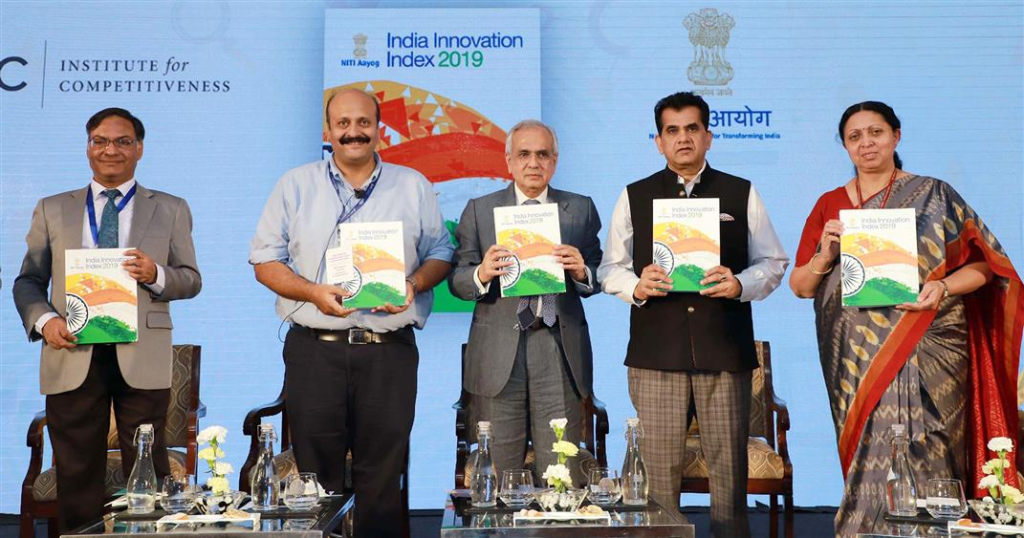
    NITI Aayog with Institute for Competitiveness as the knowledge partner released the India Innovation Index (III) 2019. Karnataka is the most innovative major state in India. Tamil Nadu, Maharashtra, Telangana, Haryana, Kerala, Uttar Pradesh, West Bengal, Gujarat, and Andhra Pradesh form the remaining

    NITI Aayog with Institute for Competitiveness as the knowledge partner released the India Innovation Index (III) 2019. Karnataka is the most innovative major state in India. Tamil Nadu, Maharashtra, Telangana, Haryana, Kerala, Uttar Pradesh, West Bengal, Gujarat, and Andhra Pradesh form the remaining top ten major states respectively. The top ten major states are majorly concentrated in southern and western India. Sikkim and Delhi take the top spots among the northeastern & hill states, and union territories/city-states/small states respectively. Delhi, Karnataka, Maharashtra, Tamil Nadu, Telangana, and Uttar Pradesh are the most efficient states in translating inputs into output.

    The index was released in the presence of Dr Rajiv Kumar, Vice Chairman, NITI Aayog; Amitabh Kant, CEO, NITI Aayog; Ashutosh Sharma, Secretary, Department of Science; Renu Swarup, Secretary, Department of Biotechnology and Vaidya Rajesh Kotecha, Secretary, AYUSH.

    Dr Rajiv Kumar expressed hope that “the India Innovation Index would create synergies between different stakeholders in the innovation ecosystem and India would shift to competitive good governance.” Shri Amitabh Kant added that “India has a unique opportunity among its myriad challenges to become the innovation leader in the world.” Renu Swarup said, “cluster-based innovation should be leveraged upon as the focal point of competitiveness.” Shri Ashutosh Sharma said, “The index is a great beginning to improve the environment of innovation in the country as it focuses on both the input and output components of the idea.” Shri Vaidya Kotecha said, “The index is a good effort to benchmark the performance of the state with each other and promote competitive federalism.”

    The study examines the innovation ecosystem of Indian states and union territories. The aim is to create a holistic tool which can be used by policymakers across the country to identify the challenges to be addressed and strengths to build on when designing the economic growth policies for their regions. The states have been bifurcated into three categories: major states, north-east, and hill states, and union territories/city-states/small states.

  • Tata Trusts challenges reopening of it’s IT assessment

    Tata Trusts challenges reopening of it’s IT assessment

    Tata Trusts has challenged the move of the income tax department of reopening of its assessment on the ground that it has already surrendered registration provisions under the I-T Act. It has pleaded that levy of additional income tax when a charitable trust converts into or merges with a non-charitable

    Tata Trusts has challenged the move of the income tax department of reopening of its assessment on the ground that it has already surrendered registration provisions under the I-T Act. It has pleaded that levy of additional income tax when a charitable trust converts into or merges with a non-charitable trust or transfers its assets on dissolution to a non-charitable institution cannot be applied to them.

    Earlier in July, the I-T department had served notices on a set of Tata Trusts seeking to reopen assessment and questioning their decision to ‘surrender’ registrations in 2015.

    According to Section 115 (TD) of the Income Tax Act, a trust whose registration is cancelled is required to pay tax on its accumulated or ‘accreted’ income. The dispute dates back to 2013 when the Comptroller & Auditor General pointed out that Jamsetji Tata Trust and Navajbai Ratan Tata Trust had invested Rs 3,139 crore in “prohibited modes of investment.”

    The CAG noted that the I-T department had given “irregular tax exemptions” to these trusts, resulting in Rs 1,066 crore escaping the tax net. In March 2015, the Tata Trusts surrendered their registrations (under 12AA of the I-T Act) while admitting that some of their assets were not in compliance with the provisions of Section 13(1)(d) of the Act.

    However, following the CAG’s observations and subsequent remarks by a sub-panel of the Public Accounts Committee (PAC) in 2018, the matter was transferred to the I-T department’s assessment wing that has now sought an explanation from the trusts.

    The trusts, according to the PAC report, were investing in prohibited modes of investment despite the law strictly forbidding public charitable trusts from holding such assets after 1973. Tata Trusts currently seem to be in a state of flux with the exit of CEO R Venkatraman, who signed letters seeking cancellation of tax benefits on behalf of the trustees. His successor is yet to be appointed after his exit in February 2019.

    “However there are certain queries for which the department will reach out to the assessee before passing the final order which is expected to be by December,” an IT official has said, referring to the deadline for the decision regarding the case. The income tax department is of the view that after invoking the provisions of 115 (TD) after considering the fair market value of the trusts’ total assets and net liabilities, the tax will amount to at least Rs 1,800 crore, going by conservative estimates.
    Source: ET